
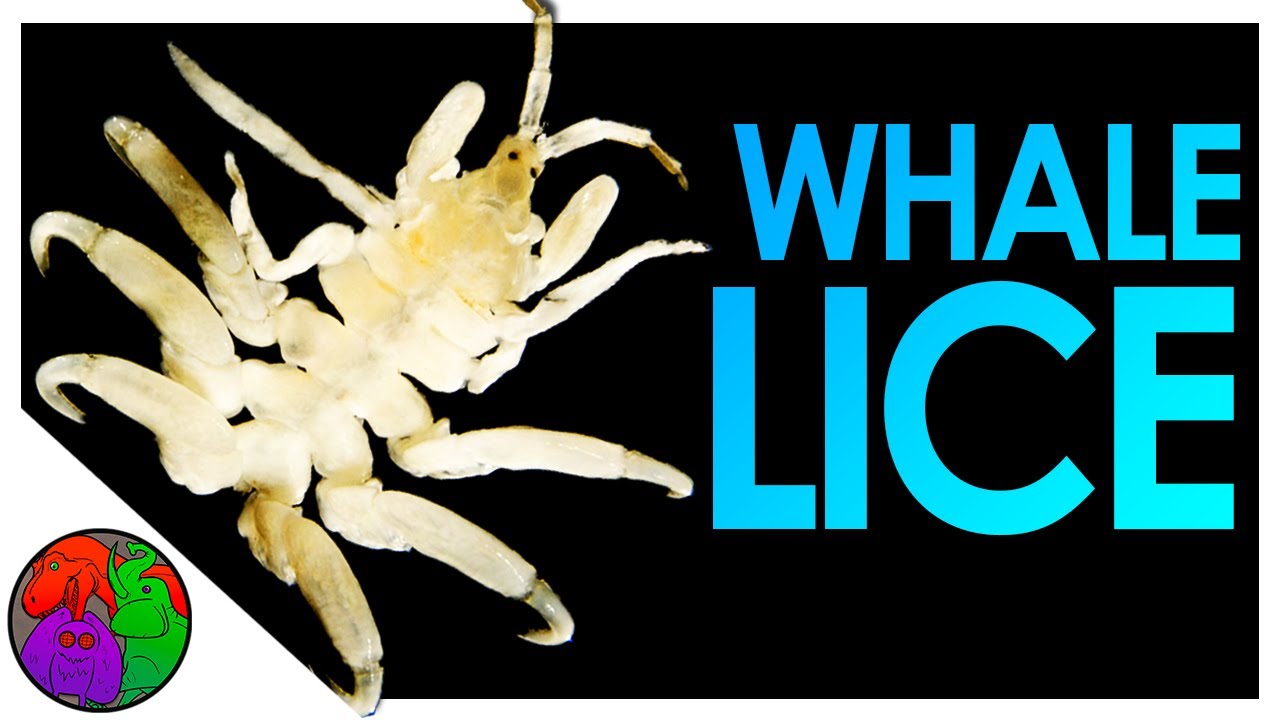
 The largest animals alive today, the whales, are not exempt from hitchhikers. They are living biomes of fat and muscle carrying with them whole ecosystems of predator and prey. One of their many hitchhikers has convergently evolved an appearance which resembles one of our handful of ectoparasites; lice. The relationship between whales and their lice is far more complicated than our relationship with our lice, and despite how disgusting they look, are super important to the health of an ecosystem.
 __________________________________________________________________
✅ PATREON ✅
__________________________________________________________________
✅ STICKERS & SHIRTS ✅
__________________________________________________________________
I do not own the images, music, or video used in this video, all rights and credit goes to the original owners.
__________________________________________________________________
My Links - Like and Subscribe for more videos!
✅Facebook: facebook.com/ExpeditionDG/
✅Twitter: twitter.com/EDGEinthewild
✅Instagram: @edgeonthetrail
__________________________________________________________________
Hashtags - #WhaleLice #Parasites #Whales
__________________________________________________________________
RESOURCES:
Tammy Iwasa-Arai, Cristiana S. Serejo, Salvatore Siciliano, Paulo H. Ott, Andrea S. Freire, Simon Elwen, Enrique A. Crespo, Adriana C. Colosio, Vitor L. Carvalho, Ghennie T. Rodríguez-Rey, The host-specific whale louse (Cyamus boopis) as a potential tool for interpreting humpback whale (Megaptera novaeangliae) migratory routes, Journal of Experimental Marine Biology and Ecology, Volume 505, 2018, Pages 45-51, ISSN 0022-0981,


0 Comments